Bridge & Northern Sections Now on Separate Page as Broadway-Plymouth Safety Improvements Project
As of September 21, 2026, the City Transportation Department has separated the Broadway Bridge & Plymouth Road elements from the Division Street Bikeway Extension Project to allow additional time to evaluate new conditions.
Details will be available on the City-led Broadway-Plymouth Safety Improvements Project page soon. Please see the Press Release for more info.
Update - Most Recent Documents
Overview
The Division Street Bikeway Extension will continue the two-way bikeway from Catherine Street to the south end of the Broadway Bridge, where it will connect to the Broadway Bridge side-path.
This project is a partnership between multiple City departments; collaboration increases overall efficiency and reduces the amount of time the road is under construction. The City Engineering Department will install a new water main and resurface Division Street from Catherine to Detroit Street in 2027. The DDA will install a two-way separated Bikeway and crosswalk improvements from Catherine Street to the south end of the Broadway Bridge.
Goals
- Support bicycle travel by extending safe bicycle infrastructure and connecting downtown to the Broadway Bridge and Ann Arbor’s north side.
- Make travel lanes clear and predictable for everyone using the road, improving safety for pedestrians, cyclists, and drivers.
- Implement speed management to enhance comfort and safety for non-motorized users, where appropriate
- Coordinate with water main upsizing and street resurfacing projects
- Connect and improve the safety and accessibility of downtown streets for all ages and abilities
- Meet the goals of the A2 Moving Together Toward Vision Zero Plan and the DDA’s Development Plan.
Funding
This project's funding is broken out by funding source.
The following are estimates based on earlier planning efforts. Final costs will be updated as the concept is refined and finalized once bids are received from contractors.
- Water main – (Detroit to Kingsley) replace and upsize the 1880’s water main: $500,000 (City Water Utility Fund)
- Street resurfacing – (Detroit to Catherine): $680,000 (City Street, Bridge, and Sidewalk Millage)
- Bikeway, new sidewalk and sidewalk adjustments, crosswalk improvements, parking bump-ins, RRFBs, Accessible Pedestrian Signals (APS), and transit stop upgrades: $2,050,000 (Ann Arbor DDA Tax Increment Financing (TIF)).
Project Area
2025 and Prior
- The 2025 Initial Conceptual Design is developed as a part of the Downtown Area Circulation Study.
- City Council approves the DDA’s 2026 Development Plan, extending the DDA Boundary north to Depot Street and the Broadway Bridge.
2026 – June
- The process of taking the concept plan and turning it into construction plans begins - the DDA kicks off the Division Bikeway Extension Project, from Catherine Street to the Broadway Bridge.
2026 - July
- The Transportation Department kicks off the Broadway Bridge & Plymouth Rd Sections in July. The projects are merged together to facilitate a smooth connection between them and to collaborate on public engagement events.
- Public walking tours and the open house are advertised to the public.
- The project team meets with other city departments and agencies (Fire, AAATA) to work through specific needs and requirements.
- An updated concept plan is developed for the upcoming walking tours.
2026 - August and September
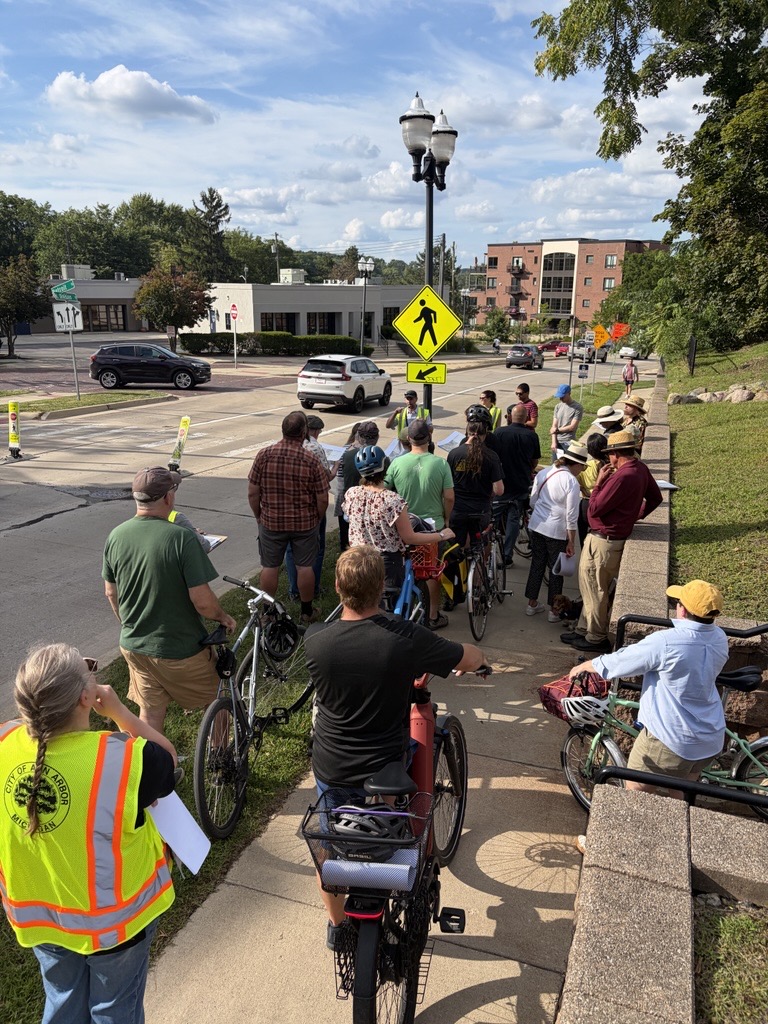
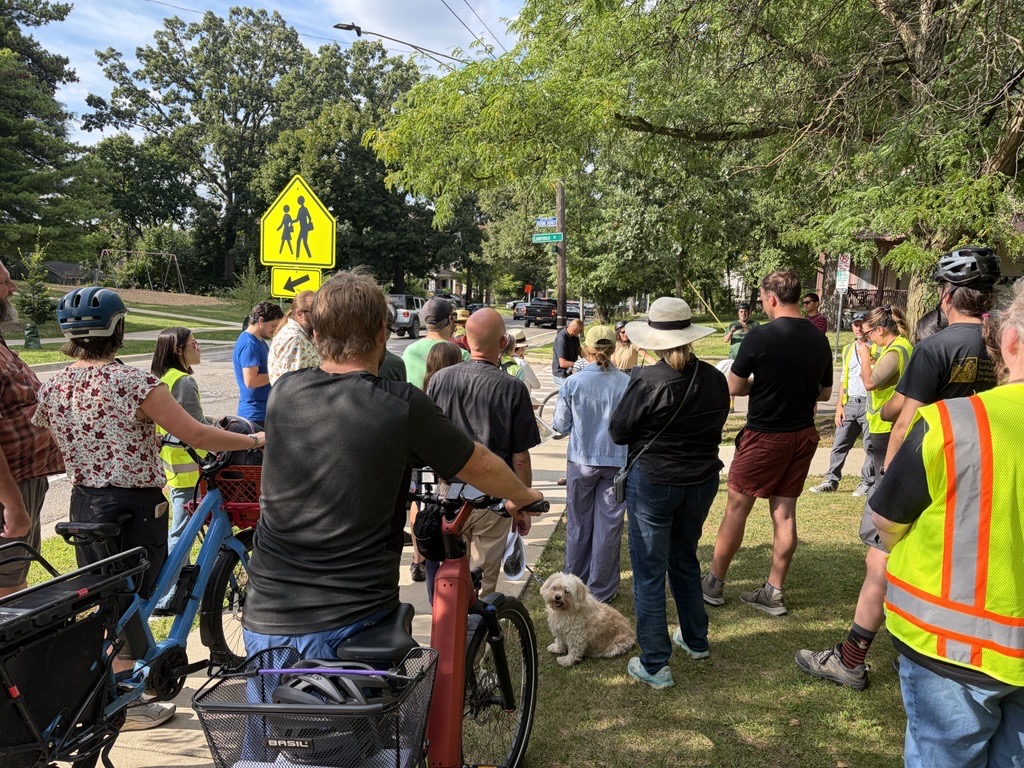
- Walking Tour August 25 (Tuesday) at 5 p.m.,
- Walking Tour September 11 (Friday) at 1 p.m.,
- Public Body Meetings: September 16 (Wednesday). The project team presented to several of the city’s appointed boards and commissions and collected feedback:
Projects Split: September 18 (Friday). The City Transportation Department separated its project portion, Broadway/Plymouth Safety Improvements, to take additional time to evaluate new conditions related to Broadway and Plymouth Road.
- Division Bikeway Extension Informational Open House: September 23 (Wednesday) from 5-7 p.m., will be held at the DDA offices (located in the Kerrytown Shops on the 2nd floor, right next to V2V clothing boutique). The open house is focused only on the Division Bikeway Extension from Catherine to the Broadway Bridge.
- New events in November are scheduled for the Broadway/Plymouth Safety Improvements (the sections that include the Broadway Bridge and Plymouth Road).
Prior Engagement
- Downtown Area Circulation Study
A collaboration between the DDA and City Transportation that involved multiple rounds of public engagement, informing the priorities for future capital improvements in the downtown area
- People-Friendly Streets Initiative engaged the public to get feedback on bike infrastructure throughout downtown. The DDA’s People-Friendly Streets (PFS) initiative began in 2018 – prioritizing people, placemaking, and resilience.
Data and Analysis
- Multiple transportation and safety analyses of different types have been conducted over the past 5 years as a part of the recent plans and studies. Most recently, two analyses were conducted as part of the Downtown Area Circulation Study (page 148, aka Appendices D and E).
- Bikeway Loop Safety Update 2025
Provides an overview of the crash data for the downtown bikeway loop in 2025.
Informational Open House: September 23 (Wednesday) from 5-7 p.m., at the DDA offices (located in the Kerrytown Shops on the 2nd floor, right next to V2V clothing boutique).
FAQ
Street Closure Information
There are no street closures for this project until construction begins in 2027.