Packard Street
Image 1 of 3
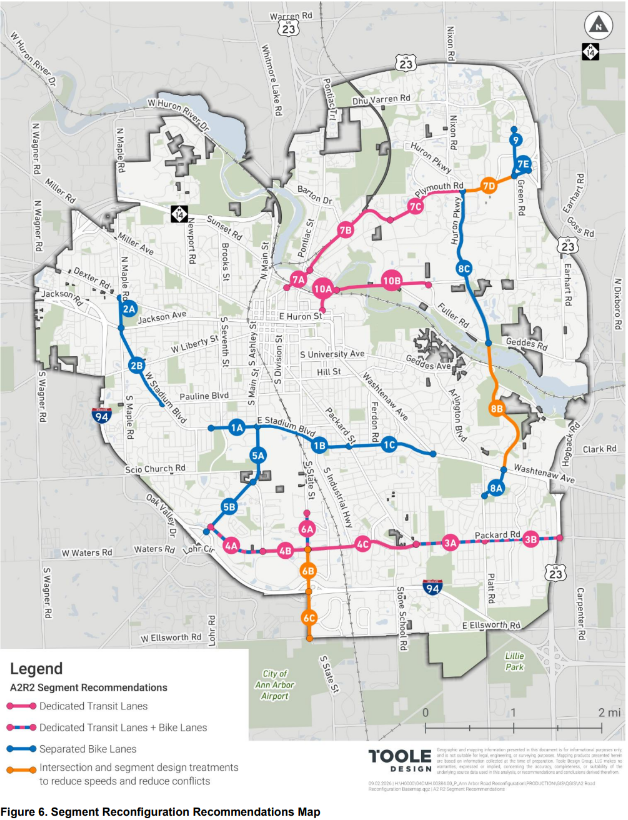
Corridor Context
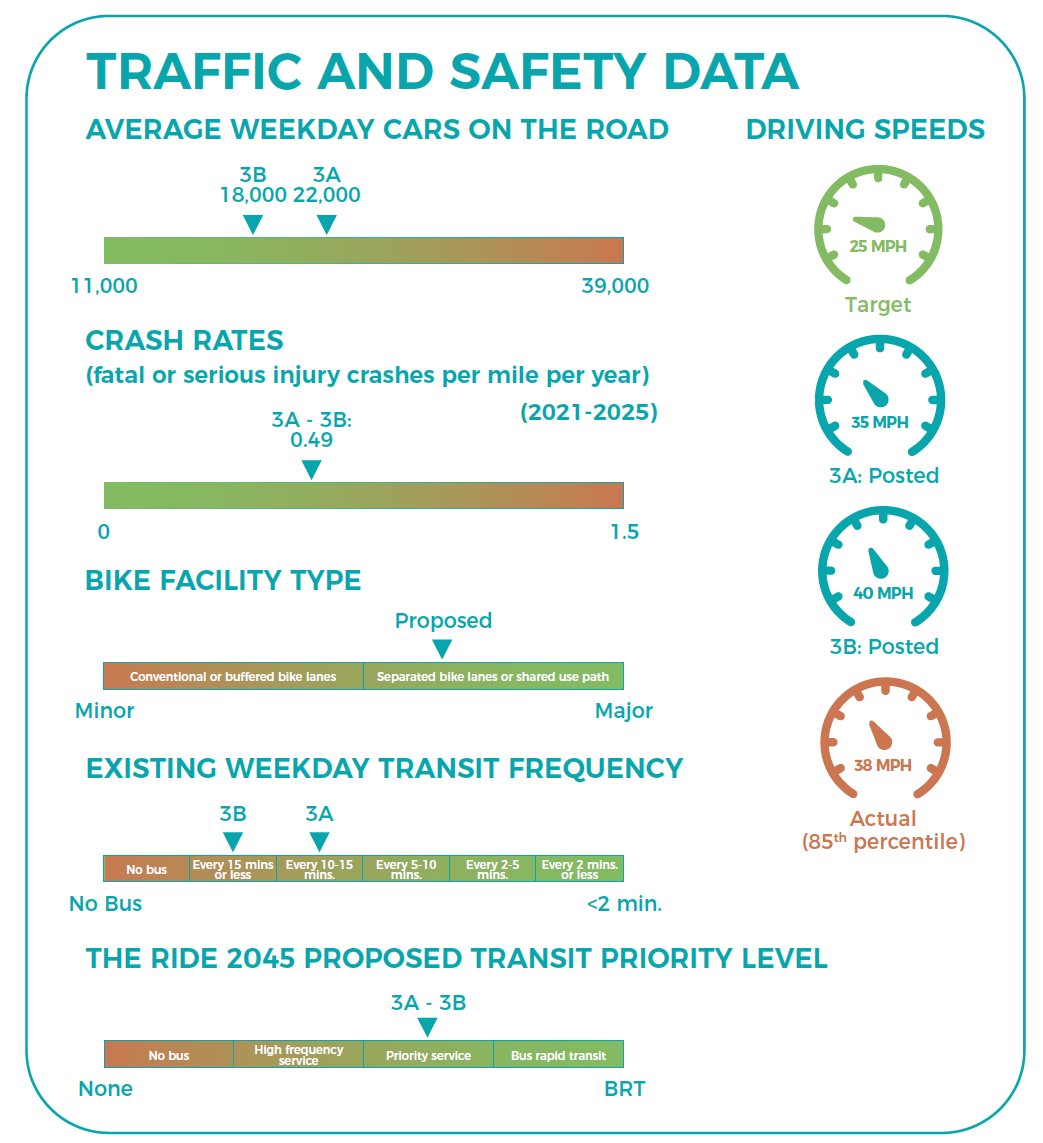
Average Weekday Cars on the Road
3B: 18,000
3A: 22,000
Crash Rates 2021-2025
(Fatal or serious injury crashes per mile per year)
3A-3B: 0.49
Driving Speeds
Target: 25 MPH
Posted: 35MPH (3A); 40MPH (3B)
Actual (85th Percentile): 38 MPH
Bike Facility Type
Proposed: Separated bike lanes or shared use path
Existing Weekday Transit Frequency
3B: Every 15 minutes or less
3A: Every 10-15 minutes
The Ride 2045 Proposed Transit Priority Level
3A-3B: Priority service
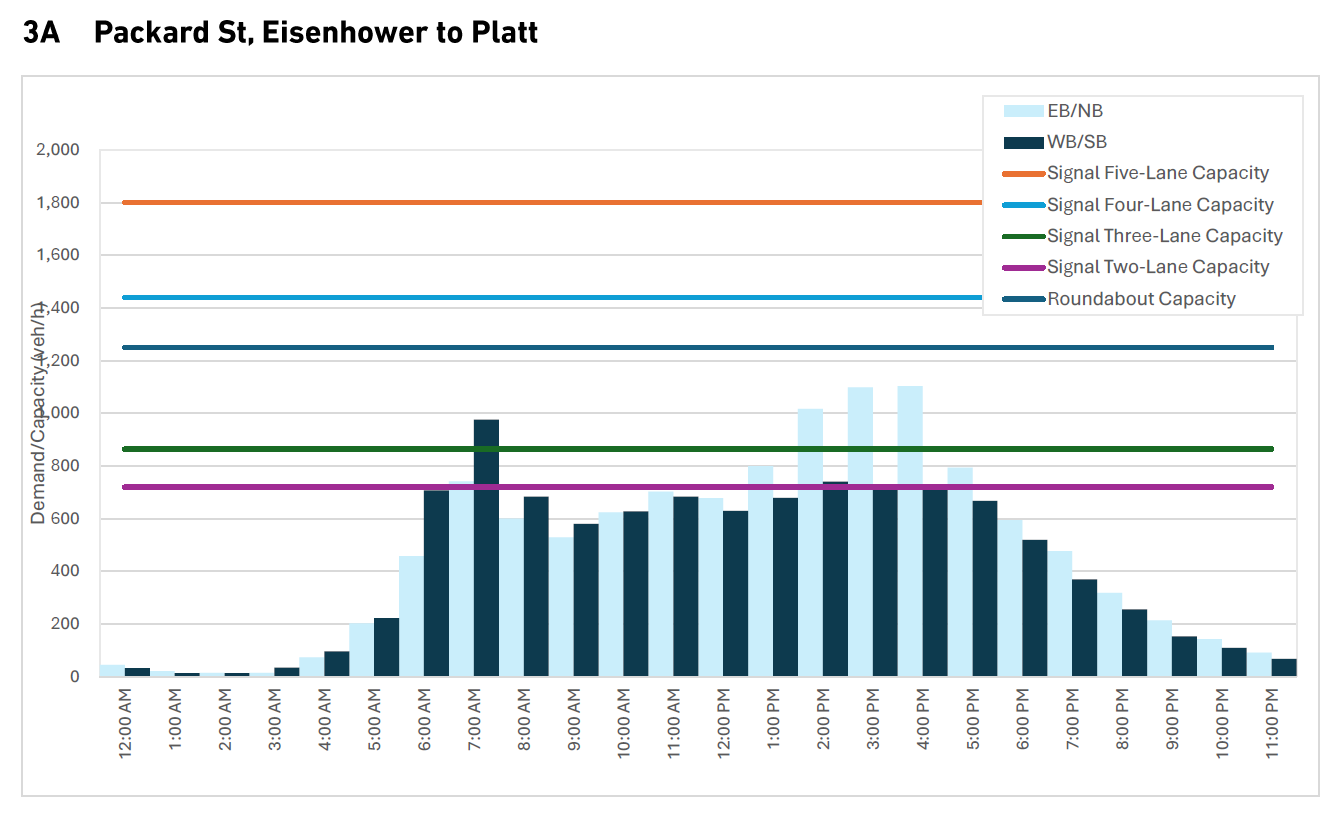
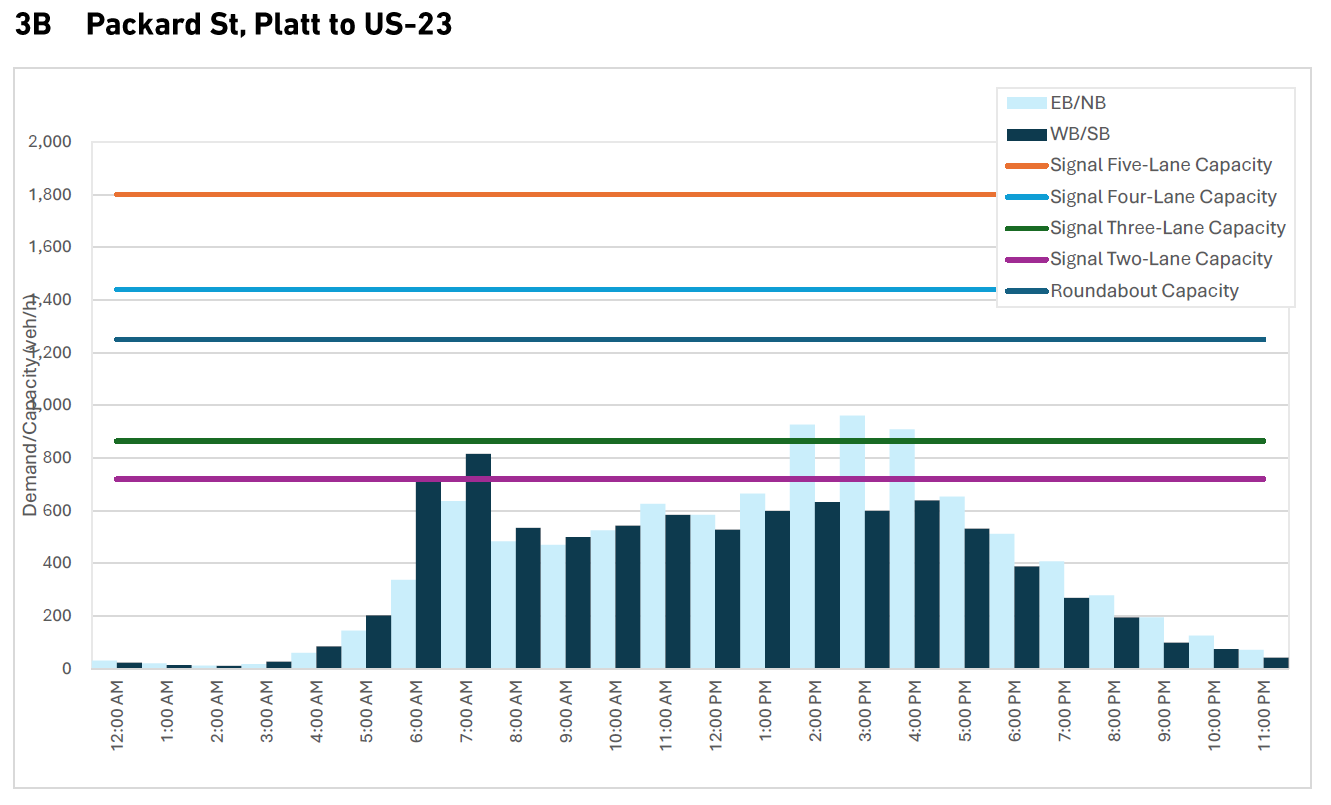
For A2R2, vehicle volumes and speeds were collected using standard pneumatic-tube traffic counters over seven consecutive days, September 17–23, 2025. This provided traffic information for every hour of the day, including five weekdays and two weekend days. U-M and Ann Arbor Public Schools were in session, there was no home football game during the collection period, and the roads were not directly affected by active construction. This provides a broader picture of traffic patterns than counts limited to the morning and afternoon rush hours.
The summary charts show how traffic demand varies throughout the day, allowing us to identify periods when traffic volumes may present challenges to changing the roadway configuration.
- Major safety concerns for pedestrians and bicyclists, especially near schools and high-activity areas.
- Frequent comments about missing sidewalks, missing bike lanes, and unsafe crossings.
- Strong desire for traffic calming and road narrowing, balanced against peak-hour congestion concerns.
Packard Street is scheduled for resurfacing in 2027, including a new mid-block crossing, localized bicycle improvements, and signal work. A larger roadway reconfiguration would follow as a future design project after nearby construction on US-23 and Washtenaw Ave is complete. A2R2 findings will provide the starting direction for that future work.
Corridor Recommendations
Safer crossings for pedestrians and bicyclists
Safer bicycle facilities
Reduced vehicle speeds
Improved transit service
Current conditions
Both segments are on the High Injury Network. Existing speeds are about 37-38 mph compared with a 25 mph target. The corridor has conventional bike lanes now but a higher-comfort bicycle connection is planned. There are frequent pedestrian crossings to the many destinations along the corridor and transit service provides important connections. Coordination with neighboring jurisdictions will be needed to connect the bicycle facility beyond the city limits. Current traffic exceeds the planning-level three-lane screening capacity during a few hours of the day.
What this design achieves
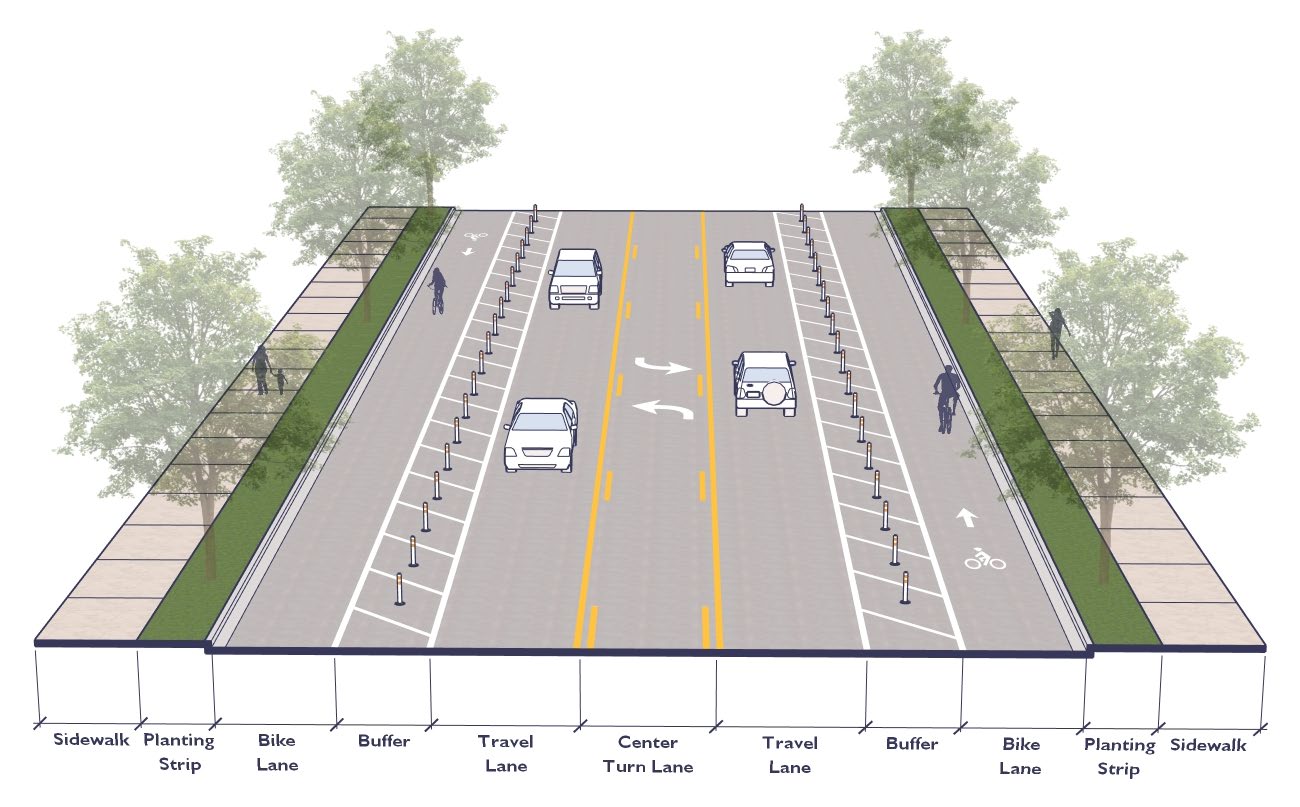
Where lane reallocation can be achieved, use the reclaimed space for separated bicycle facilities and a street design that reinforces lower speeds and safer crossings. Future design should also address bus reliability at major intersections and other locations where transit delay is concerned.
Design direction
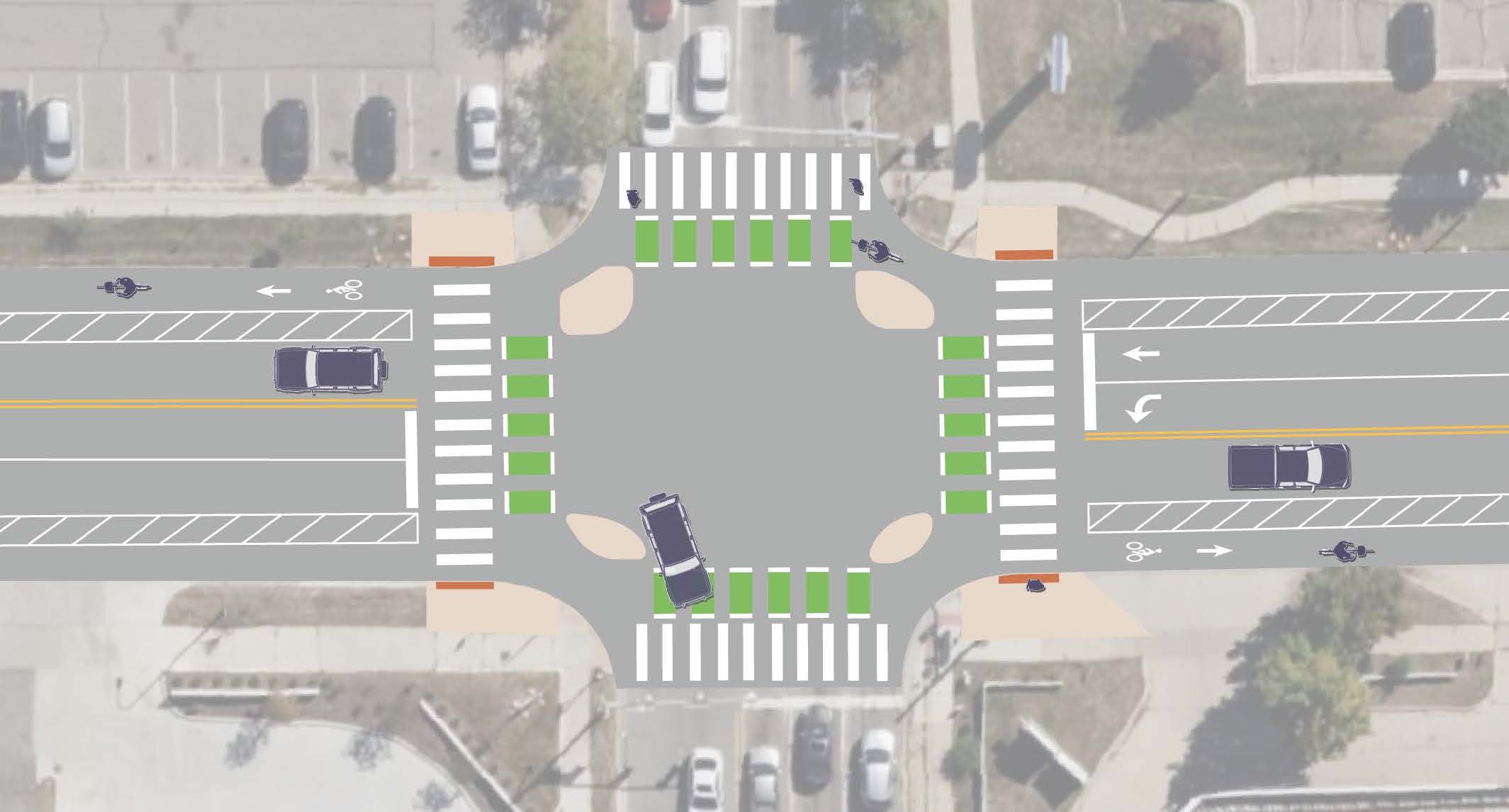
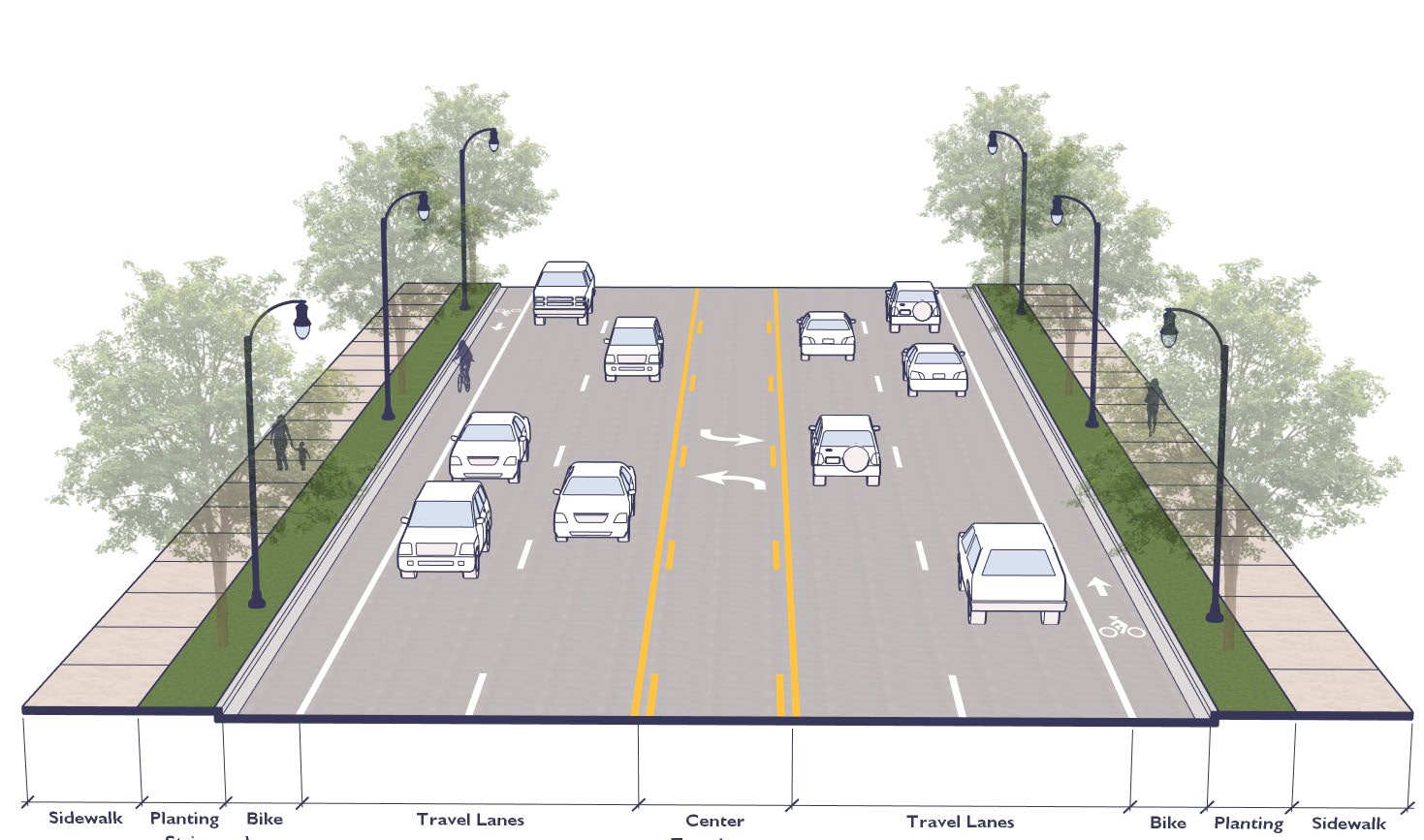
One through lane in each direction can reduce passing opportunities and support lower speeds. This configuration also shortens and simplifies pedestrian crossings, allows for continuous protected bicycle movements and slower vehicle turning movements. Intersection operations still require detailed design and analysis.
Future design should address
Packard/Platt operations, school and park crossings, transit stops, driveway and business access, bicycle continuity, recurring peak-hour conditions, and potential changes in travel routes on nearby streets.
Future design will need to refine major intersections, crossing locations, driveway access, transit operations, and transitions between segment types.
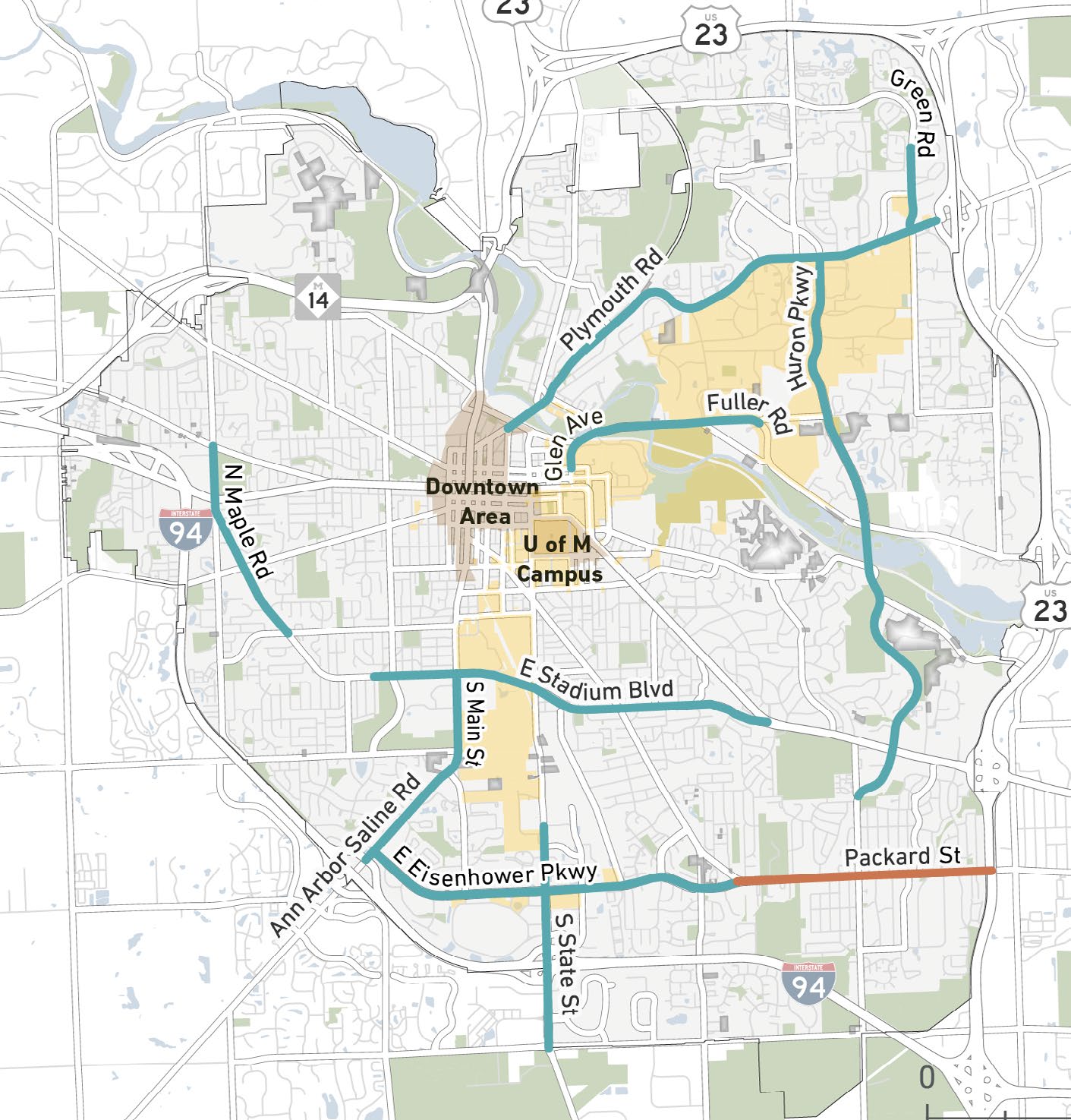
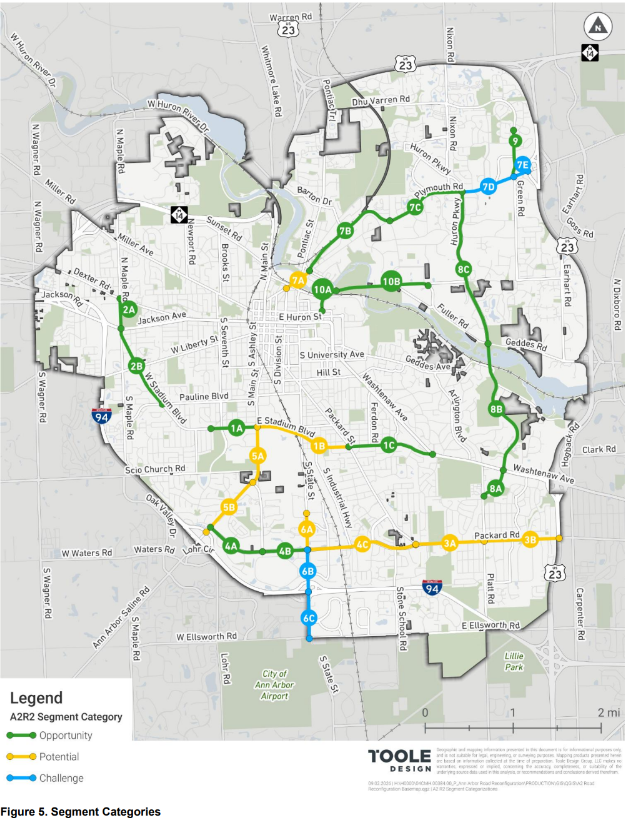
Packard St
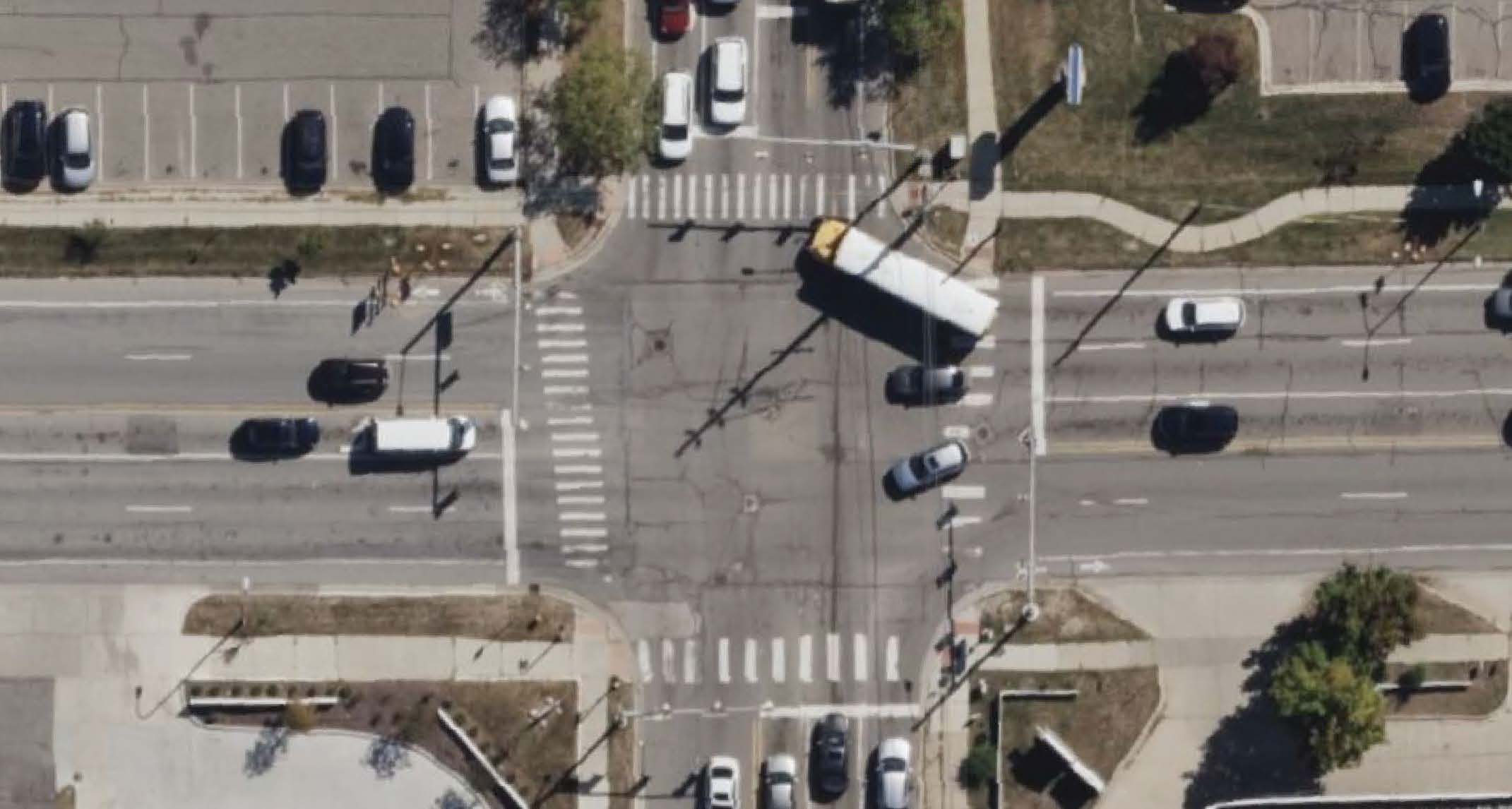
Packard St & Platt Rd